






※以下の記事は一部に自動翻訳システムを活用しています。理解しづらい翻訳になっている個所もありますが、あらかじめご了承ください。
こたつ掛け
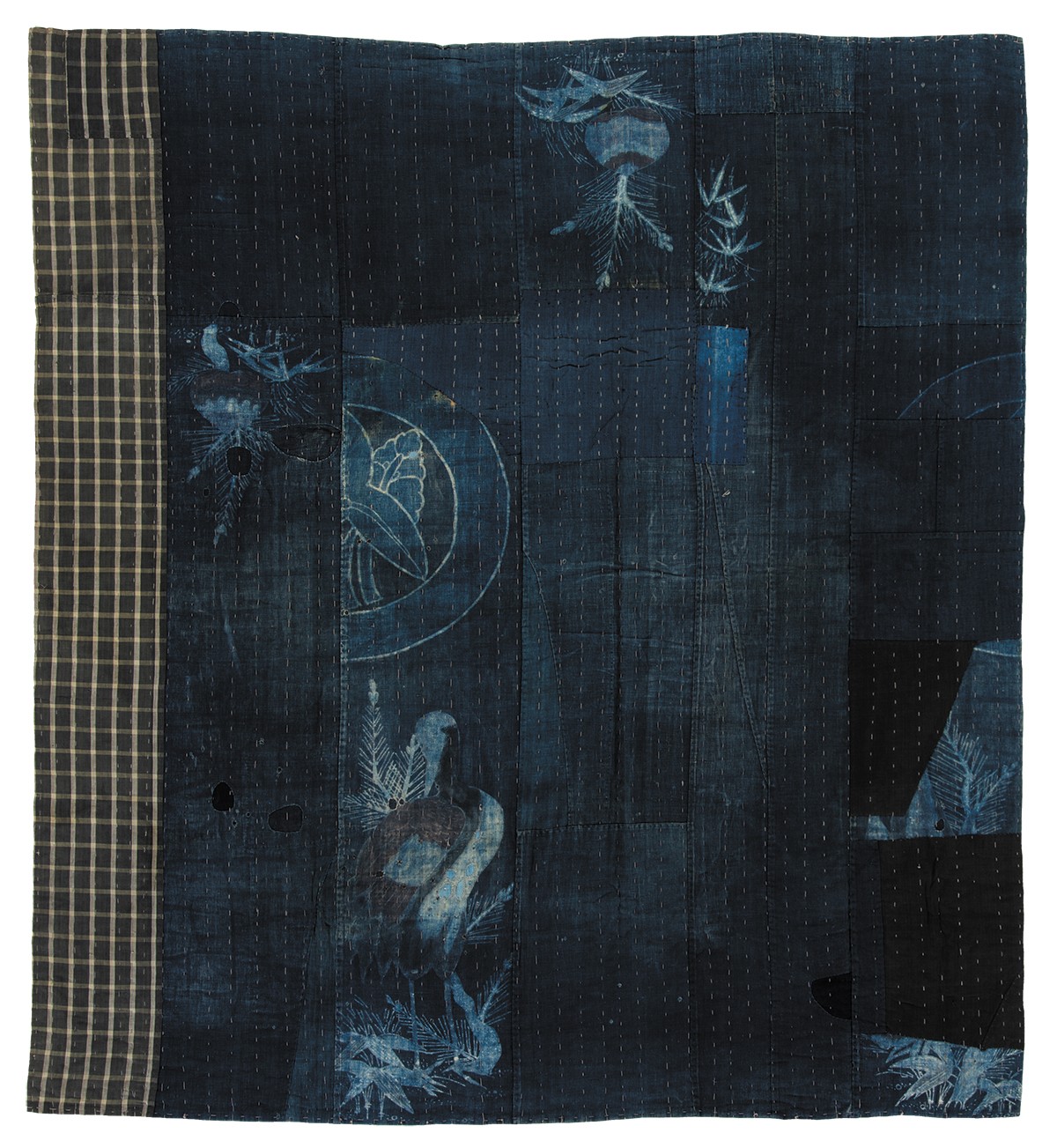
松、梅、竹という「冬三友」を描いた模様が施されたこのパッチワーク織物は、火鉢で温める低い机にかけるキルト状のカバー「こたつ掛け」として使われていたものと思われます。中央にある紋章のような模様は、ある家や小規模な商店の所有者を示すものかもしれません。
「筒描き(糊染め)」の模様に使われた白い顔料は、顔料に含まれる亜鉛の影響か劣化が進み始めており、おそらく裕福な家庭のために作られたものと思われます。また、中央付近の表面に縫い合わされた、珍しい斜めのパネルにも注目してください。これらはかつて、裾が細くなった作業用ズボンだった可能性があります。この作品に見られる布地の組み合わせは、織物が地域間だけでなく、社会的階層を越えて流通していたことを如実に物語っています。
このボロ布は現在、IQMのウェスト・ギャラリーで開催中の「BORO:日本の修繕された布に秘められたものと見えるもの」展にて、6月20日まで展示されています。
本展は、ワダヨシコ博士がIQMのキュレーターチームと共同で企画したもので、美しく、かつ生活に欠かせないこれらの布を紹介しています。「ボロ」とは、使い古して穴が開き、それを何度も繕い直すという、使い続け、再利用するサイクルを意味する日本の言葉です。主に第二次世界大戦前の日本各地の農村地域において、ボロは生活そのものでした。布団カバーや衣類といった日常のテキスタイルは、布の切れ端とシンプルな直線縫いを使って、繰り返し修繕されていました。
ーーーーーーーーーーーーーーー
(以下原文)
Decorated with remnants depicting pine, plum, and bamboo — the "Three Friends of Winter" — this pieced and patchworked textile likely served as a kotatsugake, the quilted cover for a low table heated by a brazier. In the center, a crest-like design may record the identity of a household or small business.
The white pigment used for the tsutsugaki (rice-paste resist dying) designs has begun to deteriorate, possibly due to zinc in the pigment, and likely would have been created for a wealthier family. Notice also the unusual diagonal panels pieced into the surface near the center — these may once have been tapered work pants. The combination of these fabrics in this piece exemplifies how textiles moved not only regionally but also across social hierarchy.
This boro textile is currently on display as part of “BORO: The Hidden and the Visible in Japanese Mended Textiles” in the IQM’s West Gallery through June 20.
Guest curated by Dr. Yoshiko I. Wada in collaboration with the IQM curatorial team, this exhibition highlights these beautiful and essential textiles. "Boro" is a Japanese term associated with the cycle of use and reuse — of wearing something out and mending it, time and again. In rural communities across Japan, mainly before World War II, boro was a way of life. Everyday textiles such as bed covers and clothing were repeatedly repaired using scraps of fabric and simple running stitches.