






※以下の記事は一部に自動翻訳システムを活用しています。理解しづらい翻訳になっている個所もありますが、あらかじめご了承ください。
生命の木
今月の「キルト・オブ・ザ・マンス」では、この美しいチンツ・アップリケの作品をご紹介します。
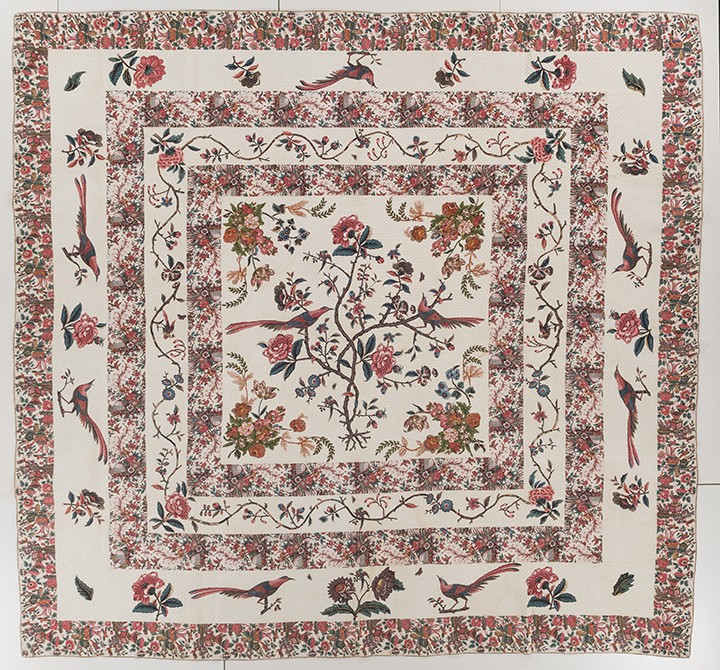
このキルトは、5つの異なるボーダーと、長い尾を持つ色鮮やかな鳥、枝、花などが際立つ中央のモチーフが特徴です。この時代の多くのアメリカン・チンツ作品と同様、このキルトもかなり大きなサイズです。幅は11フィート、高さは10フィートを少し超える大きさです。
「生命の木」の模様は、初期のチンツ・アップリケ・キルトで好んで用いられたデザインでした。インドの織物を通じてヨーロッパやアメリカに伝わったこのモチーフは、癒やし、不死、そして守護の象徴として世界的に広く認識されています。
2種類のボーダー生地は、格子模様の門や、中国、日本、その他のアジア諸国の装飾芸術に影響を受けた独特な花瓶や壺の特徴を持っています。「シノワズリ」として知られるこれらのデザインは、フランス語で「中国」を意味する「chinois」に由来し、誇張された架空のディテールを加えることで、自由に再解釈されています。
このキルトは現在、「マテリアル・ネイション:アメリカのキルト250年」展の一環として、コリエル・ギャラリーで展示されています。12月19日の会期終了までに、この素晴らしいキルトと当館全体で開催中の展覧会をぜひご覧ください。
生命の木
作者不詳
おそらく米国東部で制作されたもの。1790年~1810年頃
綿
IQM 2007.034.0001
ーーーーーーーーーーーーーーーーーーーーーーーーーーーーーーーーーーーーーーーーー
(以下原文)
Tree of Life
For our Quilt of the Month, we are sharing this beautiful example of chintz appliqué.
This quilt features five distinct borders and a center motif that prominently displays long-tailed, colorful birds, branches, and floral patterns. Like many American chintz pieces from this period, this quilt is quite large. It measures 11 feet wide and a little over 10 feet tall.
The tree of life pattern was a favored quilt design of early chintz appliqué quilts. Introduced to Europe and America through Indian textiles, the motif is universally recognized as a symbol of healing, immortality, and protection.
Two border fabrics feature latticework gates and unusual vases and urns influenced by the decorative arts of China, Japan, and other Asian countries. The designs, known as chinoiserie, from the French word 'chinois,' meaning Chinese, were freely reinterpreted through the addition of exaggerated, imaginary details.
This quilt is currently on display in the Coryell Gallery as part of “Material Nation: 250 Years of American Quilts.” Don’t miss your chance to see this incredible quilt and our museum-wide exhibition before it closes on Dec. 19.
-----
Tree of Life
Maker Unidentified
Probably made in the Eastern United States; Circa 1790-1810
Cotton
IQM 2007.034.0001